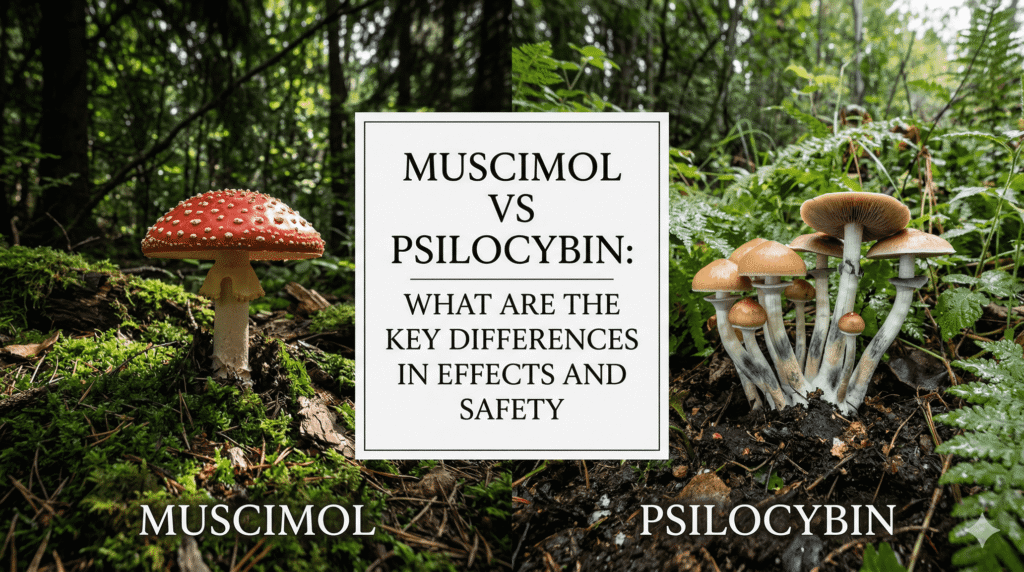
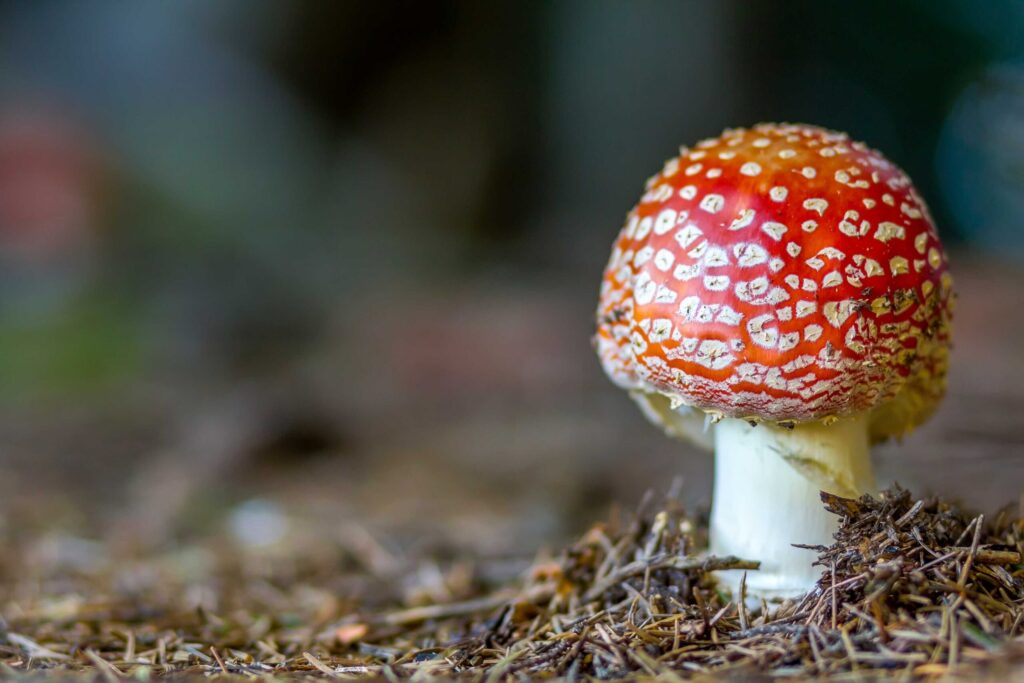
Muscimol and psilocybin are both psychoactive compounds derived from mushrooms, but they are fundamentally different in their chemical structure, mechanism of action, effects on the mind and body, and safety profiles. While psilocybin is a classic psychedelic found in “magic mushrooms” (e.g., Psilocybe), muscimol is a deliriant/sedative compound found in Amanita muscaria (fly agaric).
Muscimol and psilocybin are two distinct psychoactive compounds that produce very different effects through separate biological mechanisms. Muscimol, derived from Amanita muscaria (fly agaric) mushrooms, acts as a GABA receptor agonist, creating sedating and dreamlike experiences, while psilocybin from magic mushrooms activates serotonin receptors to produce classic psychedelic effects.
At Mushroom Magical, we believe that accurate information is the foundation of safe exploration. If you have questions about our Amanita muscaria gummies or want help choosing the right product, contact us today.
What Is Muscimol and How Does It Work in the Body?
Muscimol is the primary psychoactive compound in Amanita muscaria mushrooms, functioning as a GABA-A receptor agonist that produces sedative, hypnotic, and dissociative effects. Rather than amplifying sensory perception, muscimol enhances the brain’s main inhibitory system, turning down neural activity to create relaxation, altered time perception, and dreamlike states.
How Muscimol Interacts with GABA Receptors
GABA (gamma-aminobutyric acid) is the brain’s primary inhibitory neurotransmitter. When muscimol binds to GABA-A receptors as a direct orthosteric agonist, it mimics GABA’s natural calming effect and slows brain activity. This is distinct from benzodiazepines, which enhance GABA activity by binding to a separate allosteric site on the same receptor complex.
The Role of Ibotenic Acid in Amanita muscaria
Amanita muscaria contains both muscimol and ibotenic acid. Ibotenic acid is the precursor compound that converts to muscimol through decarboxylation, typically achieved through drying or controlled heating. Fresh, improperly prepared mushrooms retain more ibotenic acid, which causes nausea and discomfort.
Onset, Duration, and Dose Range
Muscimol effects typically begin 30 minutes to 2 hours after consumption and can last 4-8 hours, with residual effects sometimes persisting up to 24 hours.
The dose range for muscimol breaks down as follows:
- Threshold (5-10mg): Mild relaxation, subtle mood shifts, and gentle body heaviness suitable for first-time users assessing individual sensitivity.
- Moderate (10-20mg): More pronounced sedation, dreamlike mental states, and altered time perception that most users consider the sweet spot.
- Strong (25mg+): Intensified effects with increased likelihood of nausea, confusion, and significant motor impairment. Not recommended for inexperienced users.
The gradual onset is one of muscimol’s defining characteristics and the reason patience with dosing is so important. Redosing too soon is one of the most common mistakes first-time users make.
What Is Psilocybin and How Does It Affect Brain Chemistry?
Psilocybin is a naturally occurring psychedelic compound found in over 200 species of mushrooms, converted by the body into psilocin, which activates serotonin 5-HT2A receptors throughout the brain. Unlike muscimol’s sedating action, psilocybin increases neural connectivity between brain regions that don’t typically communicate, producing visual distortions, emotional intensification, and profound shifts in consciousness.
Psilocybin’s Conversion to Psilocin
Once ingested, psilocybin undergoes rapid dephosphorylation, converting to psilocin, the actual active compound. Psilocin’s molecular structure closely resembles serotonin, allowing it to bind strongly to 5-HT2A receptors. This binding creates a cascade of effects that fundamentally alter how information flows through the brain.
The Default Mode Network and Ego Dissolution
Brain imaging research has shown that psilocybin decreases activity in the default mode network (DMN), the brain system responsible for self-referential thinking and the sense of a unified self. This DMN suppression correlates with the ego-dissolution experiences many users report, the temporary loss of boundaries between self and environment that sets psilocybin apart from virtually all other substances, including muscimol.
Onset, Duration, and Dose Range
Psilocybin effects begin 20-40 minutes after ingestion, peak around 2-3 hours, and resolve within 4-6 hours total.
Doses are measured by dried mushroom weight:
- Low (1-2 grams): Mild perceptual changes, mood enhancement, and subtle shifts in sensory perception without overwhelming effects.
- Moderate (2-3.5 grams): More pronounced visual effects, emotional amplification, and altered thinking. This is the range used in most therapeutic research.
- High (5+ grams): Intense, potentially overwhelming experiences with strong ego dissolution and mystical states that require an experienced, prepared user.
Psilocybin creates rapid tolerance, requiring several days between experiences for full effects to return.
How Do the Subjective Effects of Muscimol and Psilocybin Compare?
The core difference in subjective effects is this: muscimol produces a sedating, intoxicating experience similar to strong sedatives but with unique perceptual qualities, while psilocybin produces an energizing, visually rich, and emotionally intense psychedelic experience with unusual mental lucidity.
Physical Sensations

Muscimol users typically report feeling heavy, sedated, or physically relaxed with reduced coordination and a desire to stay still. Psilocybin often creates physical energy and restlessness, particularly during the come-up phase, with a drive to move, explore, or engage with the environment.
Visual Effects
The visual experience between these two compounds is one of the starkest contrasts. Psilocybin reliably produces vivid visuals both with eyes open and closed, including:
- Geometric patterns and fractals: Repeating shapes and designs that intensify with dose.
- Color enhancement: Colors appear more vivid, saturated, and alive.
- Visual trails and morphing: Moving objects leave trails, and surfaces appear to breathe or shift.
- Complex hallucinations: At higher doses, fully formed visual scenes that bear no relation to the physical environment.
Muscimol rarely produces significant visual hallucinations. Users might notice mild spatial distortions or enhanced dream imagery with eyes closed, but nothing approaching psilocybin’s visual intensity.
Mental Clarity and Memory
Despite psilocybin’s profound effects on perception, many users report unusual mental lucidity and the ability to observe their own altered state with metacognitive awareness. Muscimol creates more confusion and memory impairment during the experience, with users often struggling afterward to reconstruct exactly what happened. This dreamlike amnesia is another similarity to alcohol intoxication that distinguishes muscimol from classical psychedelics.
Emotional and Social Differences
Psilocybin amplifies emotions considerably, with both positive and negative feelings becoming more intense and personal insights feeling profound. Many users report deep connections to themselves, others, or nature during the experience. Muscimol’s emotional effects are more muted, producing mild euphoria or relaxed neutrality rather than emotional amplification. Socially, psilocybin users often seek meaningful connection or introspective solitude, while muscimol users generally prefer quiet, low-stimulation environments where the sedating effects can unfold comfortably.
What Are the Safety Profiles and Potential Risks of Each Substance?
Muscimol and psilocybin present very different risk profiles. Muscimol carries genuine overdose potential through respiratory depression and dangerous interactions with other sedatives, while psilocybin presents minimal physical toxicity but carries significant psychological risks.
Muscimol Safety Concerns
As a GABA agonist, muscimol can suppress respiratory function at high doses, particularly when combined with alcohol, benzodiazepines, or opioids. This creates a real overdose risk that does not exist with psilocybin. Users should treat muscimol dosing with the same caution applied to any sedating substance and never combine it with other central nervous system depressants.
Misidentification of Amanita muscaria with deadly Amanita species, such as Amanita phalloides (the death cap), is another risk for anyone foraging for wild mushrooms. Commercially prepared products from established manufacturers eliminate this risk through proper identification and standardized preparation.
Psilocybin Safety Concerns
Psilocybin’s physical safety profile is benign. There are no confirmed deaths from psilocybin toxicity alone in humans, and the compound shows no organ toxicity even at doses well above typical recreational use.
The risks are primarily psychological:
- Difficult experiences (“bad trips”): Intense fear, paranoia, or distressing thoughts that can feel overwhelming, particularly at high doses or in unsupportive settings.
- Temporary psychotic symptoms: Confusion, disorganized thinking, or perceptual disturbances that resolve as the drug leaves the system.
- Triggering latent conditions: People with a personal or family history of schizophrenia or psychotic disorders face an elevated risk of lasting effects.
- HPPD: Hallucinogen Persisting Perception Disorder, a rare condition where visual disturbances persist long after the experience ends.
Behavioral risks also warrant attention. Altered perception combined with impaired judgment has led to injuries and accidents. Safe use requires appropriate settings and a sober person nearby for inexperienced users.
Drug Interactions
Both substances carry drug interaction risks, but through different pathways:
- Muscimol + alcohol or benzodiazepines: Dangerously amplifies CNS depression and can cause life-threatening respiratory suppression. Never combine.
- Muscimol + opioids or barbiturates: Same risk as above. Any substance that depresses the central nervous system compounds muscimol’s sedating effects unpredictably.
- Psilocybin + lithium: Can cause seizures. People on lithium should not use psilocybin under any circumstances.
- Psilocybin + MAOIs: Risk of serotonin syndrome, a potentially serious condition caused by excess serotonergic activity.
Neither substance creates physical dependence in the traditional sense, though both require responsible, infrequent use.
What Are the Legal Statuses of Muscimol and Psilocybin in the United States?
Muscimol and Amanita muscaria are federally legal in the United States, not scheduled under the Controlled Substances Act. Psilocybin is a Schedule I controlled substance federally, though the legal landscape is shifting rapidly.
Muscimol’s Legal Status
Amanita muscaria can be legally sold, purchased, and possessed throughout most of the United States. Louisiana is currently the only state to have banned it outright, classifying it as a hallucinogenic plant under state law. Companies operate within this federal framework while complying with FDA regulations on labeling and product claims.
Psilocybin’s Shifting Legal Landscape
Psilocybin’s Schedule I status places it alongside heroin and LSD in the most restrictive category of controlled substances, making research historically difficult.
This is changing rapidly:
- Oregon (2020): First state to legalize supervised psilocybin therapy, with licensed facilitator centers opening in 2023.
- Colorado (2022): Voters approved a similar regulated framework for therapeutic administration.
- Decriminalized cities: Denver, Oakland, Santa Cruz, Ann Arbor, Seattle, and Washington, D.C. have made psilocybin possession the lowest law enforcement priority.
- FDA Breakthrough Therapy: Psilocybin has received this designation for treatment-resistant depression, expediting research and potentially clearing a path to medical approval.
In the meantime, someone can legally order Amanita muscaria gummies from Mushroom Magical and receive them by mail in most states, while possessing psilocybin mushrooms still carries potential federal charges.
What Therapeutic Applications Are Associated with Each?
Psilocybin has strong clinical trial evidence supporting its use for treatment-resistant depression, end-of-life anxiety, addiction, and PTSD. Muscimol’s wellness applications are less studied but show promise for stress relief, sleep enhancement, and introspection.
Psilocybin’s Clinical Evidence
The psilocybin therapy model involves one to three guided sessions combined with preparatory and integration psychotherapy, rather than daily dosing. Research at Johns Hopkins and Imperial College London shows approximately 70% of treatment-resistant depression patients responding positively, with many achieving remission after one to two high-dose sessions. The FDA’s breakthrough therapy designation reflects the strength of these results.
The mechanism behind psilocybin’s therapeutic effects appears related to its ability to disrupt rigid thinking patterns and create windows of enhanced neuroplasticity. Brain imaging shows that psilocybin temporarily increases connectivity between brain regions, potentially allowing new neural pathways to form.
Muscimol’s Wellness Applications
Muscimol’s therapeutic applications are more speculative and based primarily on traditional use and anecdotal reports.
Modern users most commonly explore it for:
- Stress relief and relaxation: Muscimol’s GABA-enhancing properties create physical and mental calm that many compare favorably to unwinding without alcohol’s next-day effects.
- Sleep and dream enhancement: The compound’s influence on sleep architecture interests users exploring vivid dreaming, improved dream recall, and lucid dreaming when taken in the evening.
- Microdosing for anxiety: Some users take sub-perceptual doses of 1-3mg to support mood and reduce anxiety without entering a full altered state, though no clinical studies on this application yet exist.
- Introspection and creativity: The dreamlike, dissociative quality can facilitate novel thinking and self-reflection in ways that suit certain artists and writers.
The key distinction from psilocybin remains evidentiary support. Psilocybin therapy has undergone rigorous clinical trials with peer-reviewed publications in leading journals. Muscimol’s applications remain largely based on individual experimentation, which does not invalidate its potential but means users should approach wellness claims with appropriate caution.
Choosing the Right Compound for Your Goals
Muscimol and psilocybin serve different purposes and suit different intentions. Someone seeking profound psychological insights, emotional catharsis, or strong visual experiences may find psilocybin more aligned with their goals, while someone interested in gentle relaxation, dreamlike states, or sleep enhancement may prefer muscimol’s sedating qualities. Neither compound is inherently superior.
For those interested in exploring muscimol legally, Mushroom Magical provides carefully formulated Amanita muscaria gummies with consistent muscimol dosing and clear labeling, and extensive educational resources. Shop our muscaria gummies to find the right product for your wellness goals.
Frequently Asked Questions
What is the main difference between muscimol and psilocybin?
The main difference is their mechanism of action. Muscimol activates GABA receptors to produce sedating, dreamlike, and physically relaxing effects. Psilocybin activates serotonin 5-HT2A receptors to produce energizing, visually rich, and emotionally intense psychedelic effects. Muscimol is legally available in most U.S. states, while psilocybin remains a Schedule I controlled substance federally.
Can you take muscimol and psilocybin together safely?
Combining muscimol and psilocybin is not recommended. Muscimol’s GABAergic sedation combined with psilocybin’s serotonergic stimulation creates contradictory and unpredictable effects. No research has examined this combination’s safety profile, and mixing psychoactive substances generally increases risks without clear benefits. Experience each compound separately before considering any combination.
Does muscimol show up on standard drug tests?
Muscimol does not trigger positive results on standard drug screening panels, which target substances like THC, cocaine, opioids, and benzodiazepines. Psilocybin also does not appear on standard 5-panel or 12-panel tests. Specialized psychedelic panels exist but are rare. Anyone with concerns about drug testing should consult appropriate resources for their specific situation before using any psychoactive substance.
How does tolerance work differently for muscimol versus psilocybin?
Psilocybin creates rapid, pronounced tolerance requiring users to wait several days between experiences for full effects to return, with cross-tolerance to other serotonergic psychedelics like LSD. Muscimol does not produce this same rapid tolerance, allowing more frequent use without substantially diminished effects. As a GABAergic substance, chronic heavy use of muscimol could theoretically lead to dependence similar to alcohol or benzodiazepines, though this appears rare with typical use patterns.
Who should avoid muscimol or psilocybin?
Pregnant or breastfeeding individuals should avoid both compounds due to unknown effects on fetal development. Anyone with a personal or family history of schizophrenia or psychotic disorders faces elevated risks with psilocybin. People taking psychiatric medications, particularly lithium or MAOIs, should avoid psilocybin without medical supervision. Anyone taking sedatives or medications that suppress respiration should avoid muscimol. People with severe liver or kidney disease should exercise caution with either compound.
Disclaimer: This article is for informational and educational purposes only and does not constitute medical advice. Psilocybin is a Schedule I controlled substance under federal law in the United States, and both compounds may carry legal restrictions in your area. Always verify local laws, consult a healthcare provider before using any psychoactive substance, and never use these compounds as substitutes for professional medical treatment.