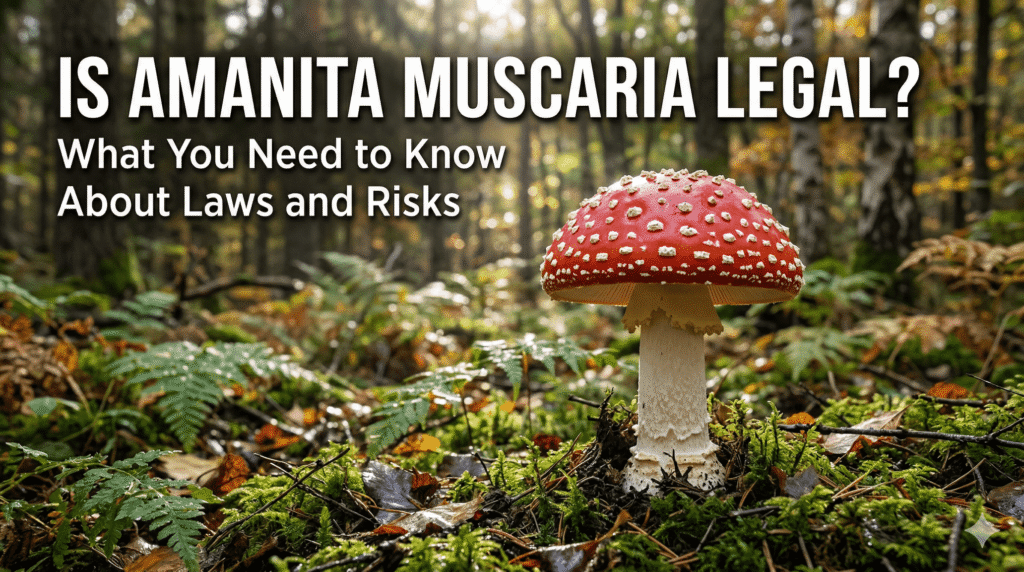
Amanita muscaria is generally legal to possess and sell in many countries, including the U.S., because it is not classified as a controlled substance. However, it remains unregulated rather than officially approved, and its compounds, such as muscimol, can cause effects like nausea, disorientation, and strong intoxication if not used responsibly.
Amanita muscaria has gained attention in recent years due to its unique effects and distinct legal status compared to other mushrooms. At Mushroom Magical, we believe that understanding the legal landscape is just as important as product quality. If you’re considering trying Amanita muscaria products or simply want to stay informed, knowing the laws and potential risks can help you make better decisions.
In most parts of the United States, Amanita muscaria is legal at the federal level, but state laws and regulations can vary. This guide breaks down what makes it legal, where restrictions apply, and what you should consider before purchasing or using it.
If you have questions or want reliable, compliant products, feel free to contact us anytime—we’re here to help.
What Makes Amanita Muscaria Legal in Most U.S. States?
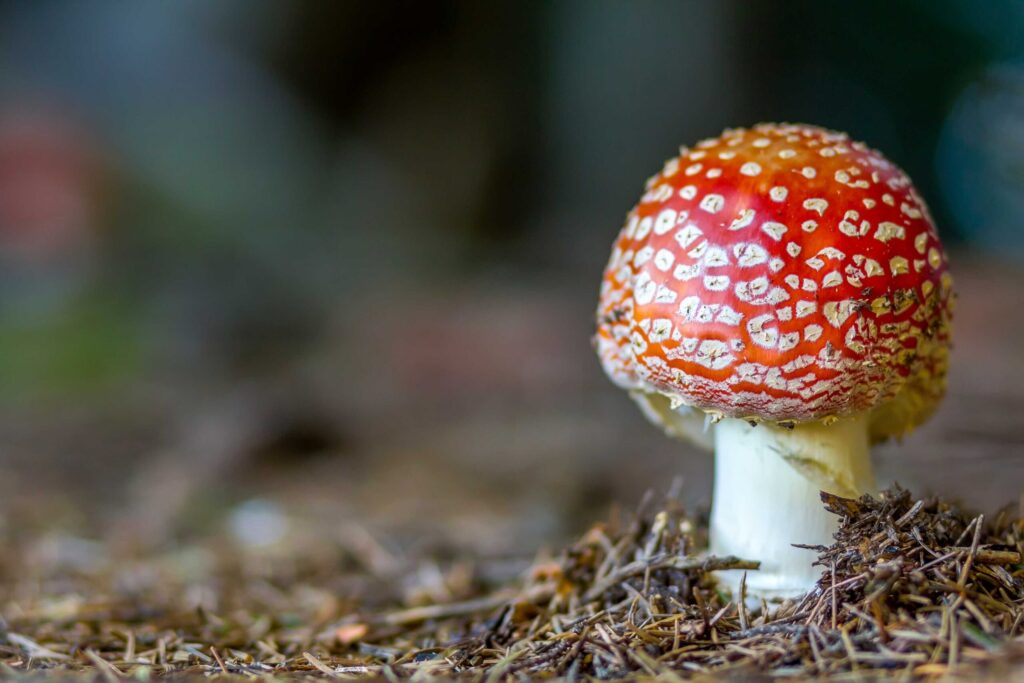
Amanita muscaria is federally legal primarily because it does not contain psilocybin or psilocin—compounds classified as Schedule I substances under the Controlled Substances Act. Instead, it contains muscimol and ibotenic acid, which are not scheduled substances.
This distinction places Amanita muscaria in a completely different legal category. While psilocybin mushrooms are prohibited at the federal level, Amanita muscaria is not regulated in the same way.
Key reasons for its legal status include:
- It does not contain federally controlled psychedelic compounds
- Its active ingredients are not listed under the Controlled Substances Act
- It does not fall under federal analog laws due to its different chemical structure
Because of these differences, Amanita muscaria remains accessible in most states, though it is still subject to general consumer safety and labeling regulations.
Which States Have Restrictions on Amanita Muscaria?
While federal law allows Amanita muscaria, state-level laws can differ. Currently, Louisiana is the only state that has explicitly banned it, making both possession and sale illegal.
In other states, Amanita muscaria is generally legal, but certain rules may apply, especially regarding how it is sold or marketed.
Some common regulatory considerations include:
- Restrictions on selling products for human consumption without proper labeling
- Requirements to classify products as supplements rather than food
- Compliance with general health and safety standards
Additionally, local regulations may vary by city or county, although this is less common. Because laws can change, it’s important to stay updated on your specific location.
Can You Legally Buy Amanita Muscaria Online?
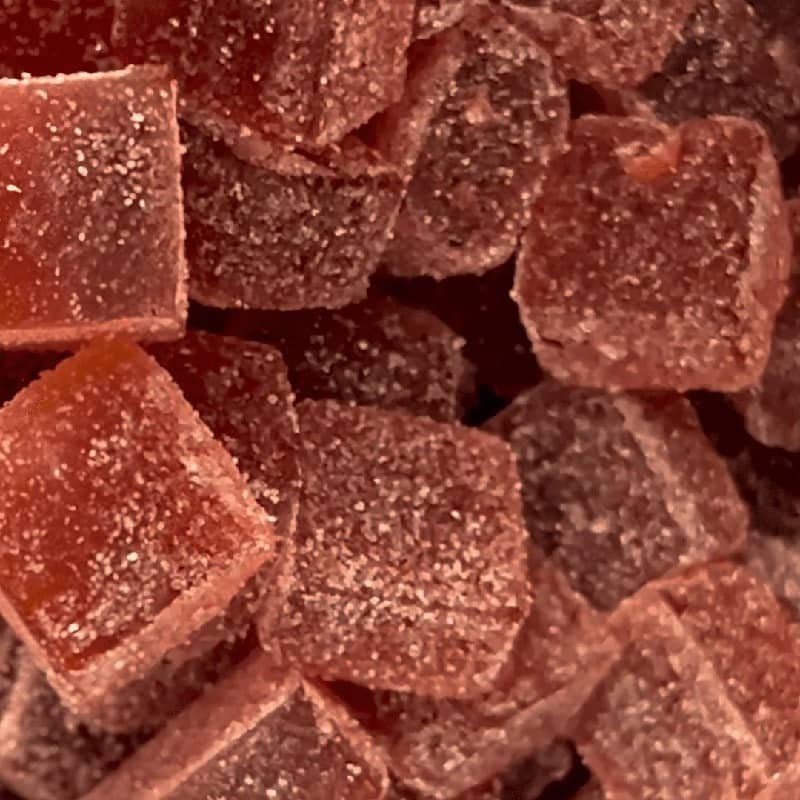
Yes, purchasing Amanita muscaria online is legal in most U.S. states. Many reputable vendors ship products such as gummies and tinctures directly to customers, with the exception of restricted areas like Louisiana.
Online purchasing is often preferred because it provides:
- Access to lab-tested, quality-controlled products
- Clear product descriptions and dosage information
- Transparency about sourcing and ingredients
Responsible companies also implement safeguards, such as:
- Blocking shipments to restricted states
- Verifying compliance with local regulations
- Providing accurate labeling and disclaimers
At Mushroom Magical, we follow strict compliance practices to ensure every order meets current legal standards so you can shop with confidence.
How Are Amanita Muscaria Products Regulated Federally?
Although Amanita muscaria is not a controlled substance, it is still subject to oversight from federal agencies like the FDA and FTC.
The FDA does not approve Amanita muscaria for medical use, which means products must be marketed carefully. They are typically sold or labeled for non-medical purposes.
Federal guidelines focus on:
- Accurate labeling and ingredient disclosure
- Avoiding unverified medical claims
- Following general supplement safety standards
Meanwhile, the Federal Trade Commission (FTC) monitors advertising to prevent misleading claims. Companies must ensure that all product descriptions are truthful and not exaggerated.
Because of this, reputable vendors prioritize transparency and responsible marketing.
How Do International Laws Differ From U.S. Regulations?
Outside the United States, Amanita muscaria laws vary widely. Some countries allow it with minimal restrictions, while others regulate or ban its sale.
For example:
- The United Kingdom restricts prepared products under psychoactive substance laws
- Canada does not classify it as a controlled substance, but regulates sales under food safety laws
- Some European countries limit sales for consumption while allowing other uses
Because of these differences, traveling with Amanita muscaria products can be risky. Even if legal in your destination, customs authorities may still question or confiscate them.
If you plan to travel internationally, it’s best to research local laws in advance and avoid carrying such products across borders.
What Legal Risks Should You Be Aware Of?
Even in areas where Amanita muscaria is legal, there are still practical risks to consider. These risks are not always related to possession but rather to how and where the product is used.
Potential legal concerns include:
- Driving under the influence: Effects like drowsiness or altered perception may lead to impairment charges
- Workplace policies: Employers may enforce rules regarding substance use, regardless of legality
- Professional standards: Certain licensed professions may restrict psychoactive substance use
- State-specific laws: Louisiana residents face legal penalties for possession
Additional considerations:
- Use in inappropriate settings could lead to safety concerns
- Mislabeling or purchasing from unreliable sources may increase risk
- Public use may still draw attention or scrutiny
Being informed about these factors helps reduce potential issues and supports responsible use.
Why Is Understanding Amanita Muscaria Laws Important?
As interest in alternative wellness products grows, so does attention from regulators. Amanita muscaria currently occupies a legal space that allows access in most areas, but this could evolve over time.
Staying informed helps you:
- Avoid legal complications
- Choose compliant, trustworthy products
- Understand safe and appropriate use
It also ensures that you are aware of both your rights and responsibilities as a consumer.
Conclusion: Is Amanita Muscaria Legal and Safe to Use?
Amanita muscaria is federally legal in the United States and widely accessible, but state laws and practical considerations still play an important role. Understanding where it is allowed, how it is regulated, and what risks may exist helps you make informed decisions.
At Mushroom Magical, we are committed to providing high-quality, clearly labeled Amanita muscaria products that meet current legal standards. We also prioritize education, so you always have accurate information before making a purchase.
Shop with us today! Our team is here to guide you toward safe, compliant, and well-informed choices.
Frequently Asked Questions
Can I grow Amanita muscaria mushrooms legally at home?
Yes, growing Amanita muscaria is federally legal in most U.S. states, except in Louisiana, where it is banned. However, cultivation is very difficult because the mushroom depends on specific tree relationships, making successful home growing uncommon.
Will Amanita muscaria show up on standard drug tests?
No, Amanita muscaria does not appear on standard drug tests used by employers or law enforcement. These tests do not screen for muscimol or ibotenic acid, making detection highly unlikely without specialized testing.
Is it legal to forage wild Amanita muscaria mushrooms?
Foraging Amanita muscaria is generally legal on public lands in most states, but rules vary depending on the location. Always check local regulations and confirm proper identification, as similar-looking mushrooms can be toxic.
Are there age restrictions for purchasing Amanita muscaria products?
There is no federal age restriction, but most reputable vendors require buyers to be at least 21 years old. These policies help promote responsible use and reduce access by minors.
What happens if laws change and Amanita muscaria becomes illegal?
If laws change, new regulations usually include a transition period before enforcement begins. Staying informed through trusted sources helps you remain compliant.
Disclaimer: This article is for informational purposes only and does not constitute legal advice. Laws regarding Amanita muscaria can change, and the interpretation of existing laws may vary by jurisdiction. Always verify current federal, state, and local regulations before purchasing, possessing, or using Amanita muscaria products.