
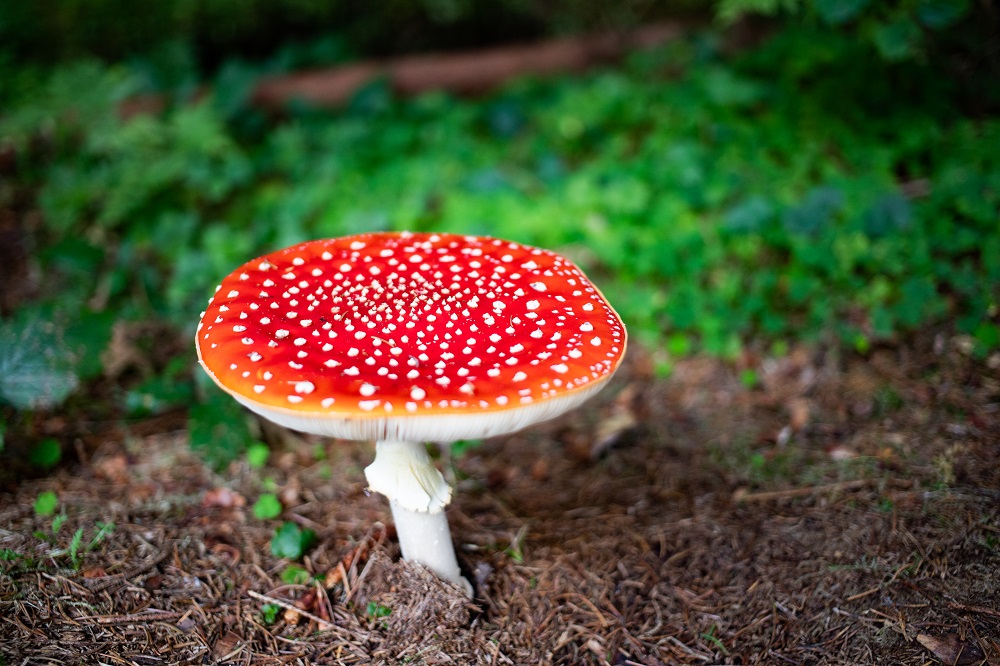
Amanita muscaria has a long history both as a psychoactive mushroom and as an insecticide. Siberian shamans used it in spiritual rituals, while in Europe, recorded as early as 1256, it was mixed with milk to kill flies. Known for its iconic red cap, it contains psychoactive compounds and was formally described by Carl Linnaeus in 1753.
Amanita muscaria has a long and complex history that spans thousands of years, shaped by cultural traditions, spiritual practices, and deep ecological knowledge. Known for its bright red cap and white spots, this mushroom has appeared in ritual use, folklore, and early ethnobotanical records across the Northern Hemisphere.
Understanding the history of Amanita muscaria helps place modern interest in proper context, especially as more people explore traditional mushroom knowledge through contemporary wellness products.
Mushroom Magical honors these traditions while creating modern wellness products that make Amanita muscaria and other functional mushrooms accessible to contemporary consumers seeking natural alternatives.
Where Did the Earliest Use of Amanita Muscaria Originate?
The earliest documented use of Amanita muscaria comes from Siberia, among indigenous peoples such as the Koryak, Chukchi, and Kamchadal tribes. These groups lived in regions where the mushroom grew abundantly under birch and pine trees. Ethnobotanical research and historical accounts from the 17th and 18th centuries describe Siberian shamans collecting and consuming the mushroom in spiritual ceremonies—a practice likely extending back thousands of years.
Siberian shamans developed detailed knowledge about the mushroom, including how the environment, season, and tree associations affected its potency. Mushrooms were typically harvested in late summer or early autumn, then carefully dried by hanging them near fires or in sunny spots for winter use.
Shamans consumed Amanita muscaria themselves rather than distributing it widely. They believed it allowed them to travel to other realms, communicate with ancestors, and gain insight into healing or resolving community issues. This careful, ritualized approach reflects a deep, multi-generational relationship with the mushroom, far beyond casual experimentation.
How Did Different Cultures Prepare Amanita Muscaria Historically?
Across Siberia, Scandinavia, and Northern Europe, drying was the most common preparation method. Drying helped preserve mushrooms, altered chemical concentrations, and made long-term storage possible.
Key traditional preparation methods included:
- Air-drying or sun-drying mushrooms in ventilated spaces
- Hanging mushrooms near fires to reduce moisture
- Stringing caps together for winter storage
- Using specific parts of the mushroom, often the cap, which contains higher concentrations of active compounds
Some Siberian groups discovered that compounds passed through the body relatively unchanged, leading to culturally specific practices. While unusual by today’s standards, these methods demonstrate careful empirical observation over generations.
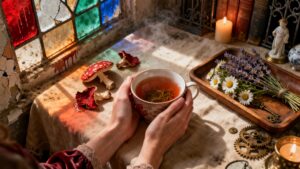
Scandinavian and Northern European groups developed their own approaches, such as infusions or decoctions.
What Role Did Amanita Muscaria Play in Shamanic Traditions?
In Siberian shamanic traditions, Amanita muscaria was a central sacrament. Shamans consumed it to:
- Facilitate spiritual journeys
- Communicate with spirits
- Perform healing ceremonies
- Divinely guide their communities
Shamans viewed the mushroom as a vehicle for navigating multiple realms: the upper world of celestial beings, the middle world of humans and animals, and the lower world of ancestors and earth spirits. Ceremonial use often included fasting, chanting, drumming, and dancing to safely induce altered states of consciousness.
Healing rituals commonly involved the shaman using Amanita muscaria to diagnose the spiritual causes of illness. The mushroom acted as both a diagnostic tool and a therapeutic aid, enabling shamans to restore balance in their communities.
How Did Amanita Muscaria Spread Across Different Regions?
Amanita muscaria naturally occurs across the Northern Hemisphere, forming mycorrhizal relationships with birch, pine, spruce, and fir trees. Its distribution spans from Japan through Siberia, Northern Europe, and North America.
While the mushroom grew naturally, human migration, trade, and cultural exchange helped spread knowledge about its use. Dried mushrooms were traded between regions, creating networks of ceremonial and practical knowledge.
European contact with Siberian peoples in the 17th century further documented its use. Observers like Philip Johan von Strahlenberg recorded indigenous practices, influencing Western understanding. In Europe, Amanita muscaria entered folklore, associated with fairy tales, magic, and occasionally folk medicine. Each region developed unique interpretations and methods independent of Siberian traditions.
What Evidence Exists for Ancient Amanita Muscaria Use?
Evidence for ancient use comes from multiple sources:
- Ethnographic records: Detailed accounts from Siberian communities over centuries
- Linguistic analysis: Specialized vocabulary in indigenous languages for stages of growth, preparation, and use
- Rock art: Petroglyphs in Siberia depicting mushroom-like shapes
- Continuity of practices: Traditions persisted into the modern era despite cultural suppression
While direct archaeological evidence is rare due to the perishable nature of mushrooms, the complexity and consistency of these cultural practices suggest long-term use over thousands of years.
How Has Modern Understanding of Amanita Muscaria Evolved?
Modern research identified Amanita muscaria’s primary active compounds: muscimol and ibotenic acid. Japanese researchers isolated them in the 1960s, explaining effects observed empirically by indigenous peoples for centuries. Drying converts ibotenic acid into muscimol, altering potency and psychoactive properties.
Today, ethnobotany and medical anthropology respect traditional practices as sophisticated knowledge systems. The mushroom’s role is now appreciated in the context of functional mushroom wellness, alongside varieties like Lion’s Mane, Reishi, Chaga, and Cordyceps.
Mushroom Magical draws from this combined knowledge, creating responsible products that reflect both historical insights and modern scientific understanding.
What Legal and Cultural Status Does Amanita Muscaria Hold Today?
In most countries, Amanita muscaria remains legal to possess and sell because muscimol and ibotenic acid are not scheduled substances. In the U.S., it is legal in most states, but the FDA does not classify it as a food or dietary supplement. Responsible companies ensure safe use through proper labeling, third-party testing, and transparency.
Legal approaches vary worldwide. Some European nations regulate its sale, while others maintain traditional tolerance. Indigenous ceremonial use in Siberia continues in limited contexts, though the Soviet era disrupted many traditions.
The modern mushroom renaissance has increased cultural interest, blending historical significance with contemporary wellness applications.
The Bottom Line
The history of Amanita muscaria reveals a journey from Siberian shamanic traditions to modern wellness exploration. Its bright red-and-white cap has inspired spiritual, medicinal, and cultural significance for millennia.
Understanding this history highlights the importance of respectful and informed use. While shamans approached Amanita muscaria within centuries of ceremonial practice, today it is accessible through regulated wellness products that combine it with other functional mushrooms.
Mushroom Magical bridges historical knowledge and modern application, offering products that honor Amanita muscaria’s legacy while providing safe, contemporary ways to explore natural wellness. Explore our products today!
Frequently Asked Questions
What is the connection between Amanita muscaria and Christmas symbolism?
Some researchers note parallels between Siberian shamanic traditions and Christmas imagery, like red-and-white clothing, winter home entry through smoke holes, and reindeer behavior after consuming the mushroom. These connections are interesting but remain speculative, with most modern Christmas traditions rooted in Christian and Victorian influences.
How do traditional preparation methods affect Amanita muscaria’s compounds?
Drying and gentle heating convert ibotenic acid into muscimol, changing the mushroom’s effects. Siberian cultures discovered these methods empirically, showing sophisticated knowledge of preparation long before modern chemistry explained why.
What happened to Siberian shamanic mushroom traditions in the modern era?
Shamanic practices were heavily suppressed during the Soviet era, with shamans persecuted and knowledge hidden. Some communities preserved traditions privately, and post-Soviet Russia has seen a partial revival, though ceremonial use remains discreet.
Why did historical cultures value Amanita muscaria when other mushrooms were available?
Its abundance under specific trees, distinctive appearance, and unique effects made it a reliable and valued mushroom for spiritual practices. Communities also traded dried specimens, reinforcing its cultural and ceremonial significance.
Disclaimer: This content is for informational purposes only. The historical information presented reflects documented traditional practices and should not be interpreted as encouragement to consume Amanita muscaria mushrooms found in the wild, which can be dangerous without proper identification and preparation. Any wellness products containing Amanita muscaria should only be obtained from reputable sources that provide proper testing, labeling, and dosing information.